
25 October 2026
How to Drill Polycarbonate Sheet: Trade Tips and Guide
Knowing how to drill polycarbonate sheet correctly can mean the difference between a pristine, long-lasting installation and a ruined panel. While polycarbonate is renowned for its remarkable impact resistance, drilling into it requires the right technique, correct bit geometry, and steady heat management to prevent grabbing, chipping, or stress cracking over time.
Why Polycarbonate Behaves Differently When Drilled
Polycarbonate is a tough, ductile thermoplastic that can withstand severe impacts without shattering. In fact, standard polycarbonate sheet is virtually unbreakable under normal conditions, making it popular for workshop visors, security screens, and industrial machine guards. However, this ductile nature means the plastic does not shear away in crisp, brittle chips like cast acrylic sheet. Instead, it tends to curl, generate friction, and absorb heat quickly.
When drilling polycarbonate, standard twist drill bits designed for timber or steel can grab the plastic on exit. When the flute aggressively pulls into the material, the sheet lifts abruptly, creating rough edges or localized micro-fractures around the hole. Over time, these micro-stresses can cause crazing, particularly if the panel is exposed to vibration, thermal cycling, or chemical cleaners.
Choosing the Right Drill Bits and Tools
You do not always need specialized industrial equipment to get a clean hole, but choosing the proper drill bit makes a massive difference to the finished edge quality. Here are the three primary types of bits used for drilling plastic:
- Plastic-ground twist bits: These standard high-speed steel (HSS) drill bits have had their cutting rake modified. A standard metal bit has an aggressive rake angle of around 118 degrees. Grinding the tip back to a flatter angle (around 60 to 90 degrees) with a zero-degree rake prevents the bit from biting too aggressively and pulling itself through the sheet.
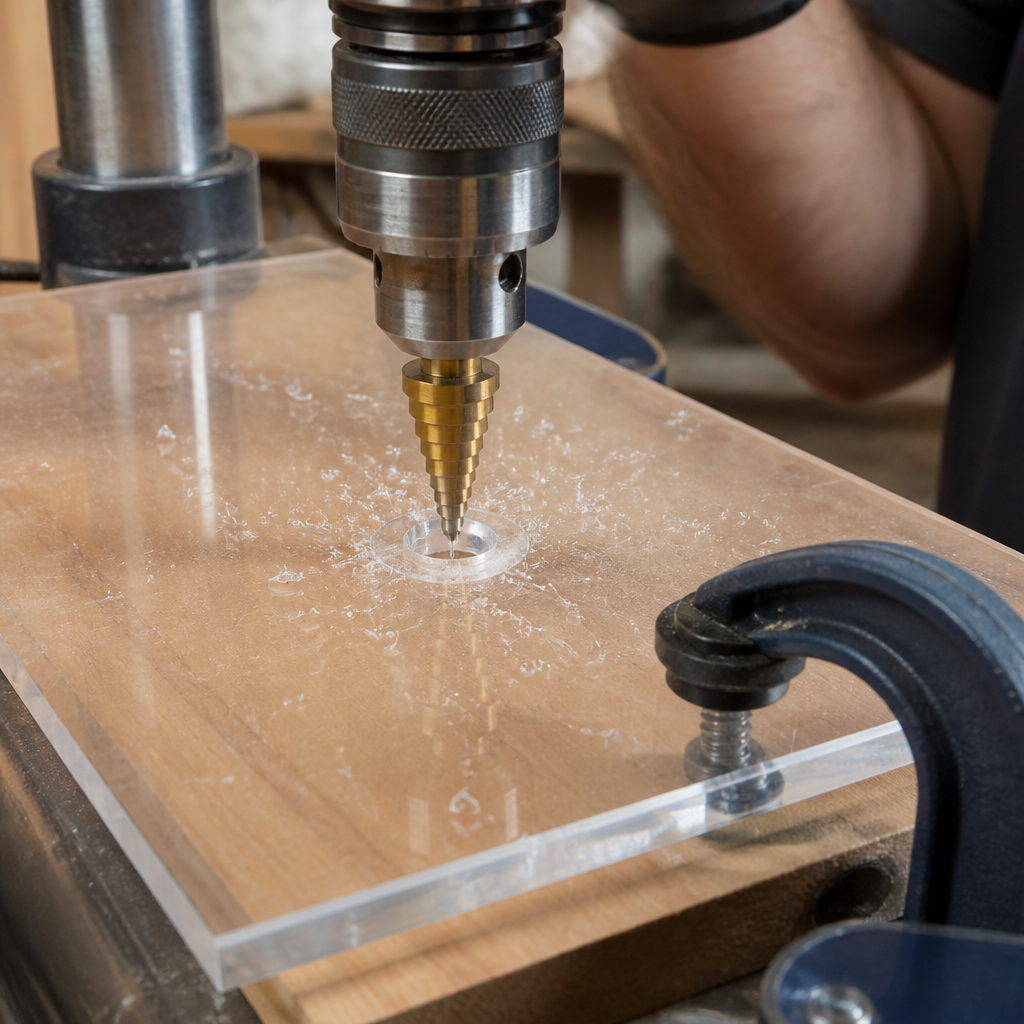
- Step drill bits (cone bits): Excellent for sheet thicknesses between 1.5mm and 6mm. Step bits create neat, burr-free holes in incremental sizes without grabbing, making them the safest hand tool choice for DIYers and fabricators alike.
- Brad point bits and hole saws: For diameters exceeding 12mm, a fine-toothed hole saw with a centre pilot drill works best. Avoid coarse woodworking hole saws, which produce excessive friction and tear the rim of the hole.
Recommended Drilling Speeds and Feed Rates
Heat is the main enemy when working with engineering plastics. If your drill speed is too fast, the friction melts the polycarbonate, wrapping sticky molten swarf around the bit. If your feed pressure is too high, you risk distorting the sheet. The table below outlines recommended drilling speeds across standard sheet thicknesses.
| Hole Diameter (mm) | Sheet Thickness (mm) | Recommended Drill Speed (RPM) | Feed Technique |
|---|---|---|---|
| 3mm to 6mm | 2mm to 4.5mm | 1,500 to 2,000 RPM | Light, steady pressure with periodic peck retracts |
| 6mm to 10mm | 3mm to 6mm | 1,000 to 1,500 RPM | Moderate pressure, clear plastic shavings regularly |
| 10mm to 16mm | 4.5mm to 9.5mm | 600 to 1,000 RPM | Step drill preferred, allow bit to cool between holes |
| 16mm to 32mm | 6mm to 12mm | 400 to 600 RPM | Hole saw with backing board, use water mist coolant |
Step-by-Step Guide: How to Drill Polycarbonate Sheet Cleanly
Follow these steps to produce clean, professional holes every time you work with polycarbonate panels:
- Leave the protective masking film in place: Polycarbonate scratches easily despite its impact strength. Keep the manufacturer film on both sides while marking hole locations and drilling. Mark your drilling targets directly onto the film with a fine felt-tip pen.
- Support the workpiece fully: Place the sheet on a solid, sacrificial flat timber backing board like MDF or plywood. Never drill a sheet resting across two sawn horses or hanging unsupported off the edge of a bench. Solid backing prevents tear-out and stops the sheet from bowing downward under pressure.
- Clamp firmly: Clamp the sheet securely to your workbench using broad clamps with rubber pads. Vibration causes chatter marks and egg-shaped holes. Clamping prevents the plastic from catching the bit and spinning uncontrollably.
- Maintain proper edge distance: Never drill a hole too close to the perimeter. A good rule of thumb is to keep the hole centre at least 2 to 2.5 times the hole diameter away from the nearest panel edge. Drilling too close to the perimeter creates weak sections prone to cracking under mechanical load.
- Peck drill to manage heat: Rather than forcing the bit through in one continuous push, apply gentle, uniform pressure and pull the bit out frequently. This peck-drilling technique clears plastic swarf and allows air to cool the cutting zone. For thick sheets over 6mm, a quick spritz of clean water helps reduce friction.
- Slow down at breakthrough: As the tip of the bit begins to emerge through the underside of the sheet, reduce your downward pressure significantly. Letting the bit coast through the final fraction of a millimetre stops grabbing and keeps the bottom surface smooth.
Allowing for Thermal Expansion and Fastener Clearance
One of the most common mistakes in trade installations is drilling holes the exact same diameter as the mounting screws. Polycarbonate expands and contracts considerably more than timber, steel, or aluminium. In Australian climates, seasonal temperature swings cause noticeable dimensional shifts.
Always drill oversized clearance holes for mechanical fixings. Add roughly 2mm to 3mm of extra clearance to the screw shank diameter. For example, if you are using an M5 bolt, drill an 8mm hole. Use neoprene or EPDM washers beneath the screw head to distribute clamping loads evenly without overtightening. Overtightening pinches the plastic and produces stress cracks as the sheet tries to move during hot summer days.
Professional Fabrication Versus On-Site Drilling
While hand drilling works well for single DIY panels, large commercial projects or precision industrial enclosures benefit from professional workshop processing. At Holland Plastics, our team uses industrial CNC router cutting tables to mill precise, stress-free holes, slots, and complex profiles directly from digital CAD files. Utilizing dedicated tooling eliminates heat build-up and guarantees exact edge tolerances across production runs.
Whether you require precision components or bulk panels supplied through our cut to size plastic service, we provide clean, ready-to-install parts tailored to your exact specifications. Our comprehensive plastic fabrication capabilities also include edge finishing, line bending, and custom assembly.
Need help choosing the right plastic material, or looking for pre-machined panels delivered straight to your site? Contact our Molendinar team or request a quote online today for prompt advice and competitive pricing.