
11 October 2026
Cast vs Extruded Acrylic: Which One Should You Choose?
Understanding the Manufacturing Process
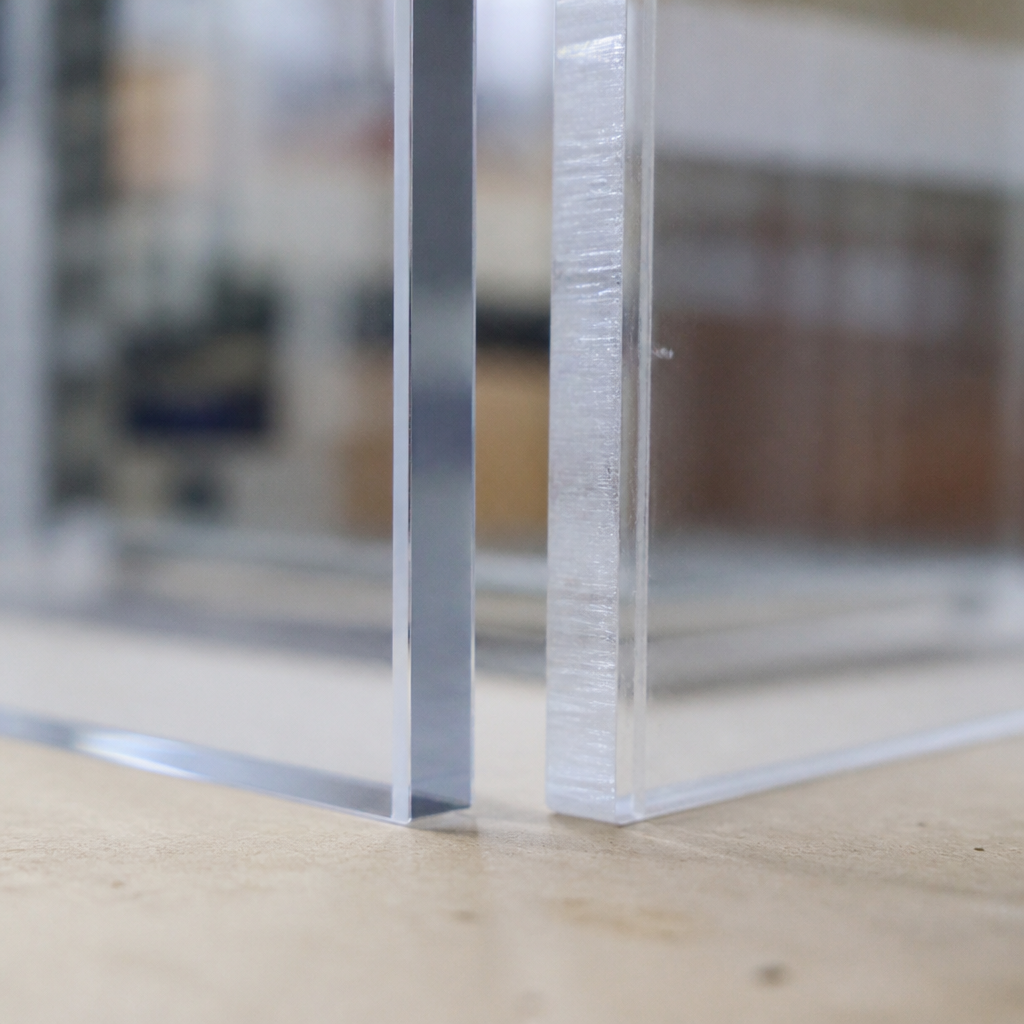
Though they look identical at first glance, the secret to understanding cast and extruded acrylic lies in how they are made. These two distinct manufacturing methods create materials with different molecular structures, which in turn gives them unique properties suitable for different jobs.
Cast Acrylic (GP)
Manufacturing cast acrylic is a batch process, similar to baking a cake. It starts with liquid methyl methacrylate (MMA) monomer, which is mixed with catalysts and any desired colourants. This liquid syrup is then carefully poured between two large panes of high quality glass, sealed with a gasket. The entire mould is then placed into an oven or water bath where a slow, controlled heating and cooling process (polymerisation) takes place. This process cures the liquid into a solid, stable sheet of acrylic. Because it's made in a static mould, cast acrylic has a very uniform thickness and is stress free. This method is more labour intensive and slower, which contributes to its higher cost.
Extruded Acrylic (XT)
Extruded acrylic, on the other hand, is made through a continuous production process. It begins with solid acrylic pellets that are fed into a long, heated barrel of an extruder machine. A large screw inside the barrel melts the pellets and forces the molten acrylic through a die. This die shapes the material into a continuous sheet of a specific width and thickness. The sheet then passes through a series of cooling rollers, which help to solidify it and give it a polished surface finish. This method is highly efficient and economical, especially for large volumes, making extruded acrylic sheet a more budget friendly option.
A Head to Head Comparison: Cast vs Extruded
Choosing the right acrylic depends entirely on your project's specific needs for precision, durability, and budget. The differences in their manufacturing result in distinct advantages and disadvantages. Let's compare them directly.
| Feature | Cast Acrylic | Extruded Acrylic |
|---|---|---|
| Thickness Tolerance | More consistent across the sheet | Higher variation, especially on wider sheets |
| Hardness | Harder, more scratch resistant | Softer, scratches more easily |
| Chemical Resistance | Higher resistance to solvents | Lower resistance, more prone to crazing |
| Machining & Cutting | Excellent; clean cuts, less melting | Good; can be 'gummy' and melt or chip |
| Laser Engraving | Creates a frosty, white contrast | Engraving remains clear, low contrast |
| Heat Bending & Forming | Can be formed, but is less predictable | Excellent; very predictable and consistent |
| Cost | Higher | Lower |
When to Use Cast Acrylic
The premium qualities of cast acrylic make it the ideal choice for applications where appearance, longevity, and fabrication quality are top priorities.
- High End Displays: For museum displays, art gallery installations, and premium acrylic display cases, the superior optical clarity and flawless surface finish of cast acrylic are unmatched.
- Awards and Engraved Items: Cast acrylic is the industry standard for trophies, plaques, and awards. This is because laser engraving produces a sharp, frosty white mark that provides excellent contrast and a high quality feel.
- Precision Machining: If your project involves intricate shapes, drilling, or threading, cast acrylic is far superior. Its stability means it's less likely to crack, chip, or melt during CNC router cutting and other machining processes, resulting in a cleaner, more polished final part.
- Aquariums and Furniture: The higher molecular weight of cast acrylic gives it greater strength and rigidity. This makes it suitable for large custom aquariums, high end furniture, and architectural elements where structural integrity and impact resistance are important.
- Machine Guards: For applications demanding exceptional clarity and a harder, more scratch resistant surface, cast acrylic is an excellent option for protective machine guards and viewing windows.
When to Use Extruded Acrylic
Extruded acrylic is a versatile and economical material, making it the go to choice for a wide variety of high volume and cost sensitive projects.
- General Signage and Displays: For standard point of sale displays, brochure holders, and everyday signage, the lower cost of extruded acrylic is a significant advantage.
- Large Production Runs: When producing thousands of identical items, the efficiency of the extrusion process keeps costs down. Its consistency is also a benefit for mass production.
- Heat Bending and Forming: Extruded acrylic is the clear winner for applications requiring heat bending or shaping. It has a lower forming temperature and behaves more predictably, making it perfect for projects involving thermo forming to create curved displays, light covers, or custom components.
- DIY and Glazing Projects: For general purpose uses like shed windows, picture framing, or protective tabletop covers where absolute precision isn't critical, extruded acrylic provides excellent value for money.
Caring for Your Acrylic
Regardless of which type you choose, proper care will ensure your acrylic stays looking its best for years to come. Always use a soft microfibre cloth and a solution of mild soap and water for cleaning. Never use paper towels or abrasive pads. It is critical to avoid cleaners containing ammonia, alcohol, or other harsh solvents, as these can cause 'crazing' (a network of fine cracks) on the surface, especially with extruded acrylic. For both types, keep the protective film masking on for as long as possible during fabrication to prevent scratches.
Ultimately, the debate of cast vs extruded acrylic isn't about which one is universally better, but which is the right fit for your specific application and budget. Cast acrylic offers a premium finish and superior fabrication qualities, while extruded acrylic provides an economical and formable alternative. If you are still uncertain about the best material for your needs, our expert team at Holland Plastics is ready to provide guidance. Request a quote today and we can help you with material selection, custom cutting, and fabrication for your Gold Coast project.